
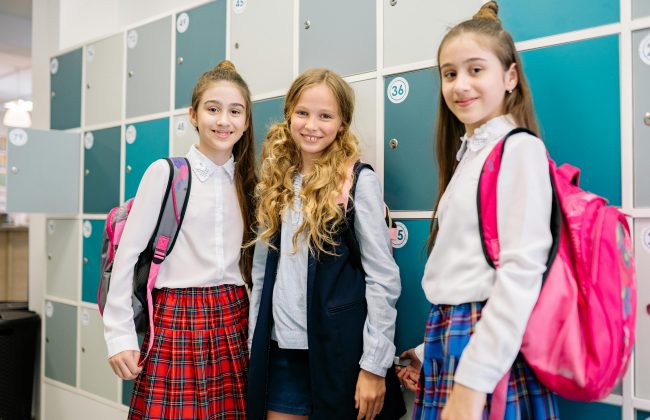
A backpack that’s too large or overloaded can cause daily discomfort for kids – sore shoulders, tired backs, and slouching by the end of the day. Younger children, especially, are still growing, and carrying a poorly sized bag every day can make school feel more uncomfortable than it needs to be.
The goal isn’t to fit everything into one bag. It’s to find a backpack that fits your child’s body comfortably and carries only what they actually need.
Backpack Size by Age & Grade (A Practical Breakdown)
Instead of focusing on liters or technical measurements, it helps to think in terms of age, height, and what your child actually carries.
Preschool (Ages 3–5)
At this stage, backpacks are mostly for snacks, a water bottle, and maybe a change of clothes. A small, lightweight backpack that sits comfortably on the child’s back is more than enough. Anything oversized will feel awkward and unnecessary.
Kindergarten to Grade 2 (Ages 5–7)
Children start carrying folders, small books, and basic school supplies. A compact backpack that can fit standard school papers without bending them works best. It should sit at or just above the waist and not extend past the shoulders.
Grades 3–5 (Ages 8–10)
This is when backpacks start getting heavier. Textbooks, notebooks, lunch containers, and sometimes gym clothes all need space. A medium-sized backpack with good organization helps distribute weight more evenly without becoming bulky.
Grades 6–8 (Ages 11–13)
Middle school students often carry multiple textbooks and may need space for binders or a small laptop. The backpack should offer more capacity but still fit snugly against the back, with padded straps and room to adjust as the child grows.
High School (Grades 9–12)
Older students typically need the most space, especially if they carry laptops or sports gear. Even so, bigger isn’t always better. The backpack should match the student’s torso length and not encourage carrying unnecessary weight every day.
How Heavy Should a School Backpack Be?
A commonly referenced guideline is that a child’s backpack should not exceed 10–15% of their body weight. While this isn’t a medical rule, it’s a helpful benchmark many parents use.
Signs a backpack may be too heavy include:
- Your child struggles to put it on
- Straps dig into shoulders
- Complaints of back, neck, or shoulder discomfort
- The backpack pulls them backward when walking
Simple adjustments, like tightening straps or removing non-essential items can make a noticeable difference.
Common Backpack Mistakes Parents Make
- Buying “one size bigger” to last longer
Oversized backpacks often end up overloaded and uncomfortable. - Focusing only on storage, not fit
A well-fitting backpack with fewer items is better than a large one filled to the brim. - Ignoring strap adjustment
Even a good backpack won’t work if it hangs too low or too loose.
Where to Find a Detailed Size-by-Grade Chart
If you prefer seeing everything laid out clearly by age, grade, and typical school load there’s a helpful Canadian backpack size-by-grade guide available at MyKite.ca that breaks this information down in more detail for parents planning ahead.
Final Thoughts
The right backpack won’t solve every school-day challenge, but it can make mornings easier and afternoons more comfortable. When a backpack fits properly, kids move more freely, complain less, and focus more on learning instead of adjusting straps all day.
When in doubt, choose comfort and fit over extra space you can always upgrade later as your child grows.