
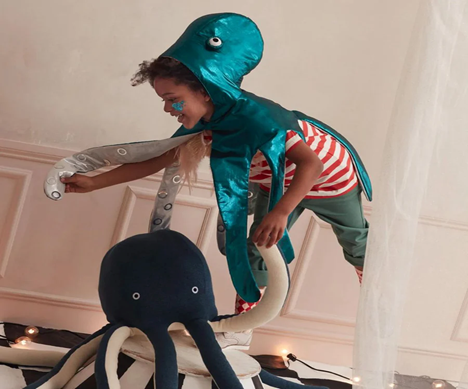
Children are natural storytellers, capable of turning everyday moments into grand adventures. One of the best ways to nurture this innate creativity is through dress-up and role play. When kids put on a costume, they aren‘t just adorning a cape or crown—they are stepping into a new world where they can explore, imagine, and learn.
Kol Kid offers a delightful range of costumes that spark imaginative play, from brave knights and whimsical fairies to daring explorers and superheroes. These costumes are more than just fun; they are tools that help children express themselves, develop social skills, and build confidence in unique and engaging ways.
The Power of Pretend Play
Pretend play, particularly through dress-up, is a cornerstone of child development. It encourages kids to think creatively, problem-solve, and engage in storytelling. When a child dons a pirate‘s hat or a chef‘s apron, they are not just playing—they are imagining scenarios, considering different perspectives, and practicing communication skills.
For example, a child pretending to be a doctor might comfort a “patient” (often a stuffed animal), demonstrating empathy and learning about caregiving roles. Similarly, a budding astronaut might “explore“ a cardboard spaceship, delving into concepts of science and adventure. These scenarios allow kids to make sense of the world around them and envision their place within it.
Social and Emotional Benefits
Role play often involves others—whether siblings, friends, or parents—making it an excellent way to foster social interaction. Collaborative dress-up games teach kids how to share ideas, negotiate roles, and work together toward a common goal, such as putting on a play or solving a pretend crisis.
Emotionally, dress-up can be empowering. Children often choose costumes that reflect qualities they admire or aspire to, such as bravery, kindness, or intelligence. Wearing a superhero cape can help a child feel invincible, while dressing as a princess might make them feel graceful and special. These positive experiences build confidence and self-esteem, reinforcing the idea that they can be anything they want to be.
Fueling Creativity and Problem-Solving
Dress-up encourages children to think outside the box. A simple costume can inspire elaborate backstories, imaginative settings, and creative problem-solving. For example, a child pretending to be a firefighter might “rescue“ their toys from an imaginary blaze, thinking critically about how to approach the task. This type of play nurtures innovative thinking and helps children develop resilience in facing challenges—both real and imaginary.
Additionally, role play can inspire an interest in storytelling and performance. By acting out scenes or creating mini-plays, kids learn narrative skills, practice public speaking, and develop a sense of timing and humour. It‘s a delightful way for them to express themselves while honing valuable skills that will serve them throughout life.
Making Dress-Up a Family Affair
While dress-up is often thought of as a solitary or small-group activity for children, it can also be a wonderful way to connect as a family. Parents can join in by taking on complementary roles or helping kids build props and settings. For instance, if your child is playing a chef, you could be their customer or sous-chef, making the play even more interactive and enjoyable.
Setting up a mini “theatre production” is another fantastic family activity. Let the kids take the lead in writing a story, assigning roles, and designing costumes.
Fostering a Lifelong Love for Creativity
The benefits of dress-up and imaginative play extend far beyond childhood. By fostering creativity, empathy, and confidence, these activities lay the groundwork for a lifelong love of learning and
exploration. They teach children to think creatively, embrace challenges, and connect with others—skills that are as important in adulthood as they are in childhood.
So, the next time your child grabs a cape or a tiara, encourage them to dive wholeheartedly into their pretend world. Celebrate their creativity, join in the fun, and watch as their imaginations take flight. Dress-up isn‘t just play—it‘s a window into the boundless possibilities of a child‘s mind.