
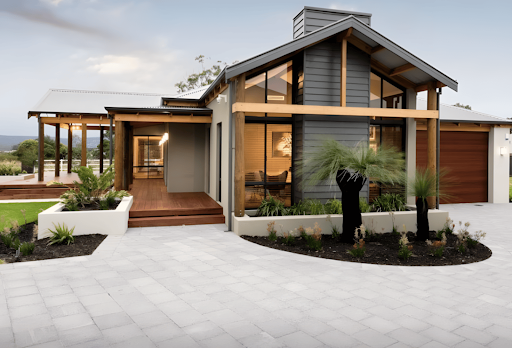
The outdoor area is often the last thing to get attention in a home renovation, and for many homeowners, it stays that way because choosing the wrong paver feels like an expensive, permanent mistake. You have done the research. You have looked at the options. And yet the decision still feels unclear, because most of what you find online does not map neatly to how you actually use your backyard.
This guide cuts through that. It covers the four main paver types available to homeowners, where each one performs best, and the practical questions worth answering before you commit to a material, so you can move from uncertainty to a confident, well-matched choice.
Why Paver Choice Has a Bigger Impact Than Most Homeowners Expect
Pavers are not a finishing touch. They are a structural and aesthetic decision that will shape how your outdoor space looks and functions for decades. Unlike paint or furnishings, laying pavers is a commitment. Lifting and replacing them later means breaking up the base, disposing of materials, and starting from scratch, which adds significant cost and disruption to a project you thought was done.
The material you choose also has direct consequences for safety and ongoing maintenance. A smooth-finish paver installed near a pool becomes a slip hazard when wet. A light-coloured stone on a high-traffic driveway shows staining and wear far faster than a material selected with that load in mind. Getting the selection right before you engage a contractor or set a budget is the most valuable step in the entire project.
The Four Main Paver Types and Where Each One Performs Best
Concrete pavers are the most widely used option for residential outdoor areas, and with good reason. They offer a consistent finish, strong durability in high-traffic applications like driveways and entertaining zones, and a broad colour range to suit most house styles. When sealed, concrete pavers also perform well against the fading effects of prolonged UV exposure.
Exposed aggregate pavers have a textured surface created by embedding stones into the concrete mix, giving them superior slip resistance compared to smooth-finish alternatives. This makes them the practical choice for pool surrounds, sloped pathways, and any area that gets wet regularly. The textured surface also has the practical advantage of concealing everyday dirt and wear, which matters in family-use spaces that see consistent foot traffic.
Travertine is a reconstituted limestone product that delivers the appearance of natural stone without the inconsistency in thickness and colour that purely natural materials carry. Its most useful property for homeowners is thermal performance, as travertine stays noticeably cooler underfoot during summer heat, making it well suited to pool paving and outdoor dining areas where bare feet are common. It sits at a higher price point than concrete, which positions it as a considered upgrade rather than a default choice.
Limestone offers a softer, more organic aesthetic that suits period homes and coastal properties where a natural look is the priority. It requires more maintenance than concrete alternatives, including periodic sealing and careful management of surface staining. For that reason, limestone is best reserved for lower-traffic decorative zones rather than driveways or heavily used entertaining areas.
Three Questions to Ask Before You Commit to a Material
The first question worth answering is how the area will actually be used. Daily foot traffic, vehicle load, poolside exposure, and how frequently you entertain all place different demands on a paved surface. A paver that performs well as a decorative garden border will not hold up as a driveway, and selecting a material without matching it to the real-world demand on that space is one of the most common mistakes homeowners make.
The second question is what climate specifically requires from your chosen material. Extended UV exposure, long dry summers, and periods of heavy rain affect how pavers perform and how quickly they fade or degrade. Sealed concrete and travertine both offer strong resistance to colour fading over time. It is also worth noting that darker-coloured surfaces absorb more heat, which can make them uncomfortable underfoot in summer, and that factor matters more in an outdoor entertaining area than a front driveway.
The third question is what the rest of the house asks for. Outdoor paving reads as part of the overall property, and a material or colour that clashes with the existing architectural style or interior palette makes the renovation feel unresolved rather than complete. The most successful outdoor transformations treat the paving as a continuation of decisions already made inside, not as a separate project with its own logic.
What to Expect When You Visit a Paver Supplier
Walking into a paving showroom is a more useful experience than most homeowners expect, provided you go in with a few things prepared. A good supplier will ask about your application, your area dimensions, and your broader project before recommending materials. Bring photos of your outdoor space and your home’s exterior, as this gives the supplier enough context to point you toward products that will actually work, rather than simply showing you what is in stock.
One practical note on colour selection: always ask to see samples in natural light before making a decision. Showroom lighting flatters most surfaces, and colours that look warm and neutral indoors can read very differently against your home’s brickwork or render in full sun. On quantities, standard practice is to order slightly above your measured area, typically around ten per cent extra, to account for cuts, breakage, and any future repairs.
The decision does not need to be final before your first conversation with a supplier. The role of that visit is to narrow your options based on informed guidance, not to arrive already decided. A supplier with genuine product knowledge will help you match material to application, and that conversation will likely resolve uncertainty that hours of online research has not.
The Right Paver Makes the Difference
Paver selection becomes straightforward once you match material to use case rather than leading with aesthetics. Your location climate, with its UV intensity, summer heat underfoot, and wet poolside surfaces, adds requirements that most generic paving guides overlook, and getting those details right is what separates a finished outdoor area from one you will want to revisit in a few years.