
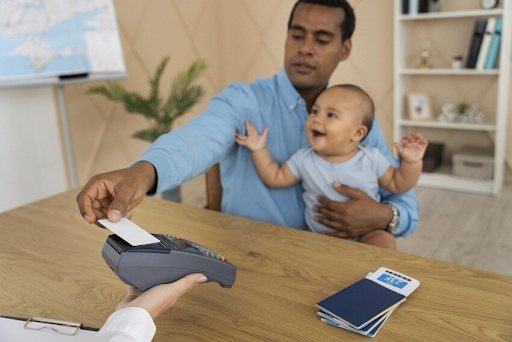
Packing for your first trip with a baby, man, it’s exciting but also kinda stressful, right? And then you got all this confusion about travel papers on top. One big question parents keep asking is, “Does an infant need a passport to travel?” If you figure this out early, it really saves you from freaking out at the airport checkpoints, and your whole trip plan stays smooth.
Now, if you’re thinking about longer trips or even just local ones now and then, grabbing a good travel stroller makes everything way easier, like walking around cities, dealing with airports, or moving between hotels. Parents who tried these swear by brands like MomCozy; their lightweight ones fold up super small, roll over bumpy cobblestones or shiny airport floors no problem, and even let the baby recline for quick naps wherever.
This article breaks it all down for you, step by step. Not just the answer to whether does an infant need a passport to travel, but also how to get the docs ready, tips on proving age, ways to speed things up, and why starting early cuts down on headaches later on.
Distinguishing Between Domestic and International Flight Rules
When families wonder, “Does an infant need a passport to travel?”, it all comes down to where you’re going, inside the country or across borders. That one thing changes everything about what ID your baby needs.
For domestic flights, the TSA says kids under 18 don’t have to show any official ID. So basically, your infant can fly around the same country without a passport at all. But airlines might still want to check age, you know, with a birth certificate or something, to make sure the baby is under two and gets that cheap lap seat or whatever.
International flights, though? Totally different ballgame. Countries treat babies like any other traveler, so yeah, they need their own passport. In the U.S., every citizen, even brand new ones, has to have a passport book (or sometimes a card in special cases) to fly over borders. Most other places do the same; no sharing with mom’s or dad’s passport, each kid counts separately.
Key takeaways:
- For trips inside the country, usually no passport is needed for a baby; a birth certificate works fine for age checks.
- For going abroad, it’s a firm yes, infants need a passport, no matter how young.
- Always peek at your airline’s rules before you book, ’cause some want age proof even on home flights.
Why Every Infant Needs a Passport for International Air Travel
People ask, “Does an infant need a passport to travel?” and for international flights, the answer is a big yes, every time. Doesn’t matter if the baby’s only a few weeks old; embassies and airlines stick to the rules.
At those border gates or check-in spots, your little one has to go through the same ID checks as grown-ups. Immigration folks need the passport number, photo, and all the personal info for tracking everyone coming in or out. You can’t just add a baby to a parent’s page anymore; each kid, even newborns, gets their own full passport to cross into other countries.
Here’s why countries push for these infant passports:
- They track every single person entering or leaving, even if the baby’s just chilling in your arms.
- It helps check safety stuff, like making sure parents and kids match up, before you pass through.
- Airlines like United, American, and Delta all demand a real passport for international baby flights, or no boarding.
Skip it, and you’re looking at long waits, extra fees to change flights, or getting turned away completely. That’s why smart parents get the passport done in those first baby months, even if the big trip’s way off.
Exceptions for Land and Sea Travel to Canada and Mexico
Not every “Does an infant need a passport to travel?” The question is about planes, you know. Lots of families think about driving over or taking ferries to places nearby, and there the rules loosen up a bit.
For driving or boating to Canada or Mexico, often a birth certificate, original or certified copy, does the job instead of a full passport. This works best for “closed-loop” trips, where you go out and come back the same way, like short car jaunts or cruises that start and end at home.
But keep these limits in mind:
- If any part’s by plane, passports kick in right away.
- Some borders or companies just like passports better anyway, to keep things simple.
- Rules shift by country and can change fast, so always check official sites for your path.
If you see more trips coming up across borders, just get the passport. It covers planes, cars, boats, way handier than messing with cards or other stuff that might not work everywhere.
Navigating “Closed‑Loop” Cruise Requirements for Babies
Cruises pop up a lot in the “Does an infant need a passport to travel?” talks, since they hit so many ports. For closed-loop ones, starting and ending in your home country, things can be easier, especially for tiny travelers.
Often, a baby can board with just a birth certificate, no passport book needed. But only if it stays a true loop to nearby spots; one little change, like an extra stop, and boom, passports required.
Cruise companies don’t leave you guessing, usually:
- They spell out the baby docs needed on their site for each trip.
- They push passports for all kids anyway, even loops, to dodge surprises at ports.
- Might need extra signed papers if the baby’s with one parent or guardian.
Bottom line, play it safe and act like yes, my infant needs a passport to travel on cruises. It’s easy to carry, everyone knows it, no arguments at the door.
Essential Documents for Getting Your Newborn’s First Passport
When families finally decide “Yes, our infant needs a passport to travel,” the next step is paperwork. Getting a baby’s first passport is straightforward but requires attention to detail because mistakes can cause long delays.
For U.S. citizens, the typical package includes:
- The infant’s certified birth certificate, issued by the hospital or vital‑records office.
- Proof of the parents’ identities, such as driver’s licenses or government‑issued IDs; at least one parent must apply in person.
- A completed passport application for a child under 16 with the correct signature section and photo.
Additional items that can smooth the process:
- Consular Report of Birth Abroad (if your child was born outside the country and you are applying via an embassy or consulate).
- A recent, compliant passport photo of the infant, proper lighting, no hats or toys blocking the face, and a white or very light‑colored background.
- Copy of divorce or custody documents if only one parent is present or an adult other than a parent is applying.
Proving Parental Consent and Relationship for Minor Applications
Authorities want to be sure that the child is traveling with the right adults and that nothing raises concerns about kidnapping or custody disputes.
In practice, this means:
- Both parents appear in person when applying for a baby’s first passport (in many countries).
- If one parent cannot attend, a notarized consent statement from the absent parent, confirming permission for the passport and travel, is required.
- In certain custody or legal situations, official court documents or guardianship papers may be requested instead or in addition.
Airline staff sometimes ask for additional proof of relationship even after the passport is issued, especially if an infant is traveling with one parent, an extended family member, or a guardian. A birth certificate and, in some cases, a court order or custody document can help avoid delays at check‑in in these scenarios.
When in doubt, it is safest to bring:
- Birth certificate.
- Parental‑consent letter, signed and notarized if only one parent or a non‑parent is accompanying the infant.
- Any relevant custody or guardianship paperwork.
Handling Airline Requests for Proof of Age on Domestic Flights
Even if “Does an infant need a passport to travel?” is not for inside flights, airlines obsess over age. Under two? Lap baby, cheaper ticket usually.
So they want:
- Birth cert, hospital paper, something for under-twos.
- Family passport copy as backup age proof.
- Doc note for super young ones, under a week sometimes, okaying the flight.
Apps that save age info after one upload make check-ins easier next time. And if you mix domestic with international later, a baby’s passport works as age proof too, handy for surprise layovers or changes at big airports.
Preparing for Emergency Travel and Expedited Processing Times
When a family must move suddenly because of medical, diplomatic, or personal reasons, having a baby passport can be the difference between boarding a flight and getting stuck.
Most national passport offices allow expedited processing for minors, including infants. While standard timelines may run several weeks, faster services can reduce that to as little as a week or less, depending on demand and location.
Parents can prepare by:
- Applying for a baby passport as soon as their citizenship documents are final, even if no international trip is yet scheduled.
- Keeping digital and hard‑copy scans of the passport, birth certificate, and consent forms in a travel folder.
- Checking whether the nearest embassy or consulate offers emergency appointment lanes or express lanes for infants traveling abroad.
Final Thoughts
So, “Does an infant need a passport to travel?” The short answer is: yes, if the trip goes outside the country by air; typically no, for purely domestic flights, though age proof is still wise. Land and sea exceptions, such as quick drives or closed‑loop cruises, may allow birth‑certificate‑only travel, but those allowances are shrinking in favor of full passports for every family member.