

What You Actually Get When You Spend More on a Breast Pump
An affordable breast pump still makes sense when pumping stays rare, flanges already fit, and the motor idles more than it runs. Stack real workdays on that same box, and the receipt grows: inserts, wandering output, maybe a second pump before the return window closes. Fifty versus two hundred dollars is a thin line on the screen next to minutes on the clock, comfort mid-session, ounces week over week, and a motor that still feels fair after month three. One bottle a day is not eight sessions with commuting and overnight feeds.
Below covers price bands, hidden budget costs, session math, insurance upgrades, and when paying more is mostly about keeping an already tired routine from folding.
Table of Contents
- What affordable breast pump pricing actually pays for
- The hidden costs behind low-cost models
- How to calculate your pumping cost per session
- Insurance changes what affordable means
- When spending more protects the routine
- Conclusion
What affordable breast pump pricing actually pays for
An affordable breast pump can still ship with real motor hardware inside. Week one often looks fine. Where the price shows up later is usually duller than a spec table. The motor may soften faster once sessions pile up. The kit may ship fewer flange sizes than your nipple measurement actually needs. Noise under a shirt gets honest when suction ramps. Open-plan desk pumping is rarely the scene on the box.
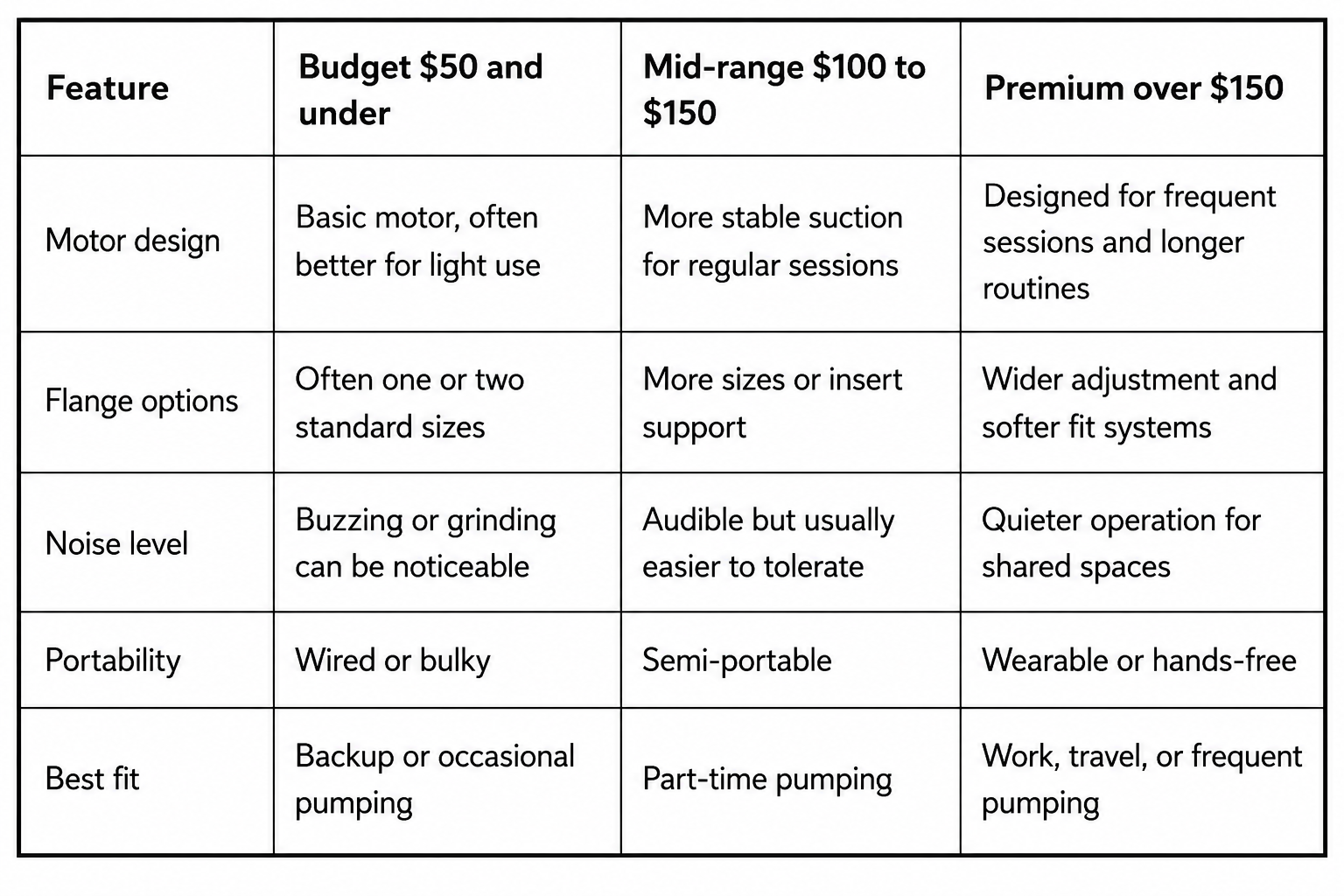
The table is not a rulebook. A parent who pumps once each evening may never need the quietest wearable setup. A parent who pumps before work, twice at the office, after the commute, and once overnight is asking far more from the same category of device. A low-cost breast pump can still be enough when evenings are the only time you use flanges and the motor sees little stress.
The most useful way to read pump prices is by stress level. How many sessions will the motor handle each week? How often will you need to move while pumping? Will the wrong flange size make sessions painful enough that you skip them? Those answers matter more than the discount on the box.
The hidden costs behind low-cost models
The first extra cost is usually the fit. Many budget pumps include a standard 24 mm flange because it covers a common starting point, not because it fits everyone. If your nipple measurement is closer to 17 mm, 19 mm, 21 mm, or 27 mm, the pump may still turn on and pull milk, but the session can feel pinchy, leaky, or less efficient.
Buying separate inserts can be a sensible fix, but it changes the real price. A $50 pump plus $20 to $40 in inserts is no longer quite the same bargain. If the flange still does not sit well in the bra or against the breast, the extra parts may not solve the problem.
Motor fatigue is the second cost. A lightly used pump can last well enough for occasional bottles. Three or more sessions daily on a budget motor often means softer pull, louder buzz, and extra minutes to finish the same ounces by month three. Week one rarely shows that slip, so a short return window is easy to misread. Shopping for a cheap breast pump that works on day one is not the same project as asking that same shell to behave in week twelve when the schedule stays stacked.
You still hear this arc in forums. A parent orders the cheapest wearable for office-only pumping, hits a shared room where the noise carries, then watches ounces wander by the afternoon pull. Inserts show up, a second pump gets ordered, and the cart that read thrifty on day one turns into the expensive route.
How to calculate your pumping cost per session
The cleanest decision tool is session math. It does not make the upfront price disappear, but it shows whether the pump is being used like an occasional appliance or daily work equipment.
If a $50 pump lasts 300 sessions, the cost is about 16 cents per session. If a $200 pump lasts 1,500 sessions, the cost is about 13 cents per session. The second pump costs more on day one, but the daily cost can be lower when it carries a heavier routine.
Use your own schedule:
- Occasional pumping, about 1 session a day: the lower price band can make sense if the fit is comfortable and you do not need quiet operation outside the home.
- Part-time pumping, about 2 to 4 sessions a day: look harder at flange options, replacement parts, battery life, and whether the motor feels steady across the whole session.
- Full-time or workday pumping, about 5 to 8 sessions a day: noise, portability, and motor consistency become practical needs, not nice extras.
Travel and commuting change the math again. Pumping in a parked car, at a desk, or between meetings adds pressure that a product page cannot fully show. A louder pump may still remove milk, but it may also make you delay a session. For supply and comfort, the pump you will actually use on time is often worth more than the pump with the lowest receipt.
Insurance changes what affordable means
For many U.S. parents, insurance changes the starting price. HealthCare.gov explains that under the Affordable Care Act, most health plans must cover breastfeeding support and supplies, including breast pumps, though the covered model, timing, supplier, and upgrade rules vary by plan.
That means the cheapest retail model is not always the smartest use of coverage. If insurance already covers a standard pump, using that benefit on a basic pump you could buy out of pocket for a low price may leave value unused. In some plans, paying an upgrade difference toward a wearable or higher-performance model can make more sense than treating the insurance option like a free throwaway.
The best affordable electric breast pump on your allowed list is still the one that matches your session count and noise needs, not whichever model has the lowest sticker price among brands you barely know.
The paperwork matters. Some plans require a prescription. Some only work through approved durable medical equipment suppliers. Some allow reimbursement after purchase; others do not. Before buying, check the allowed pump list, upgrade policy, replacement part coverage, and whether HSA or FSA funds can cover the remaining cost.
When reimbursement covers an upgrade, you often pay the retail price up front, then submit the receipt and prescription so the plan refunds only the eligible amount toward the higher-tier pump. Confirm that the cap and the required forms are available before checkout.
A central catalog does not replace your plan rules, but it can still help you line up features before you call the supplier. The eufy breast pump collection lists wearable options and related specs in one place, so you can compare fit, suction, portability, and charging with your plan details in front of you.
When spending more protects the routine
The strongest case for spending more is not status. It is routine protection. A pump used several times a day has to be comfortable enough that you do not dread it, quiet enough for the places you pump, and consistent enough that each session does not become a negotiation.
That is where premium features start to have practical meaning. A quieter motor matters if the only open room at work shares a wall with a meeting. A wearable design matters if sitting next to an outlet is the reason a session keeps getting skipped. Better flange support matters if one standard size leaves friction marks or breaks the seal.
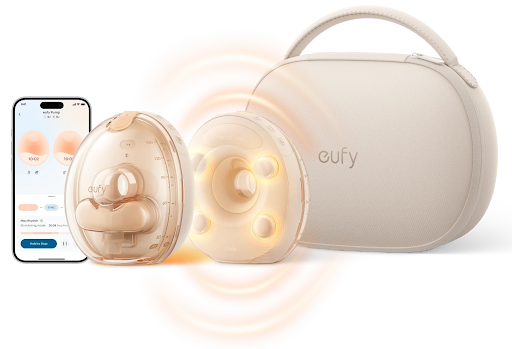
For parents who expect heavy daily pumping, the eufy Wearable Breast Pump S2 Pro belongs in this value discussion more than a bargain-basement pick. It stays in the bra, lists suction up to 300 mmHg, and runs at 46 dB in typical use, so most desk setups stay workable, with app tweaks when the controls are buried under fabric. The wireless charging case and a short stack of milk-path parts are what make long workweeks and travel feel feasible, as long as you plan for shorter unplugged stretches when sessions run long, or you lean on warming and massage every time.
Not everyone needs that level of pump. If you only pump once in a while, a lower-cost model that fits well may be enough. If pumping is tied to your return to work, supply maintenance, or an exclusive pumping plan, paying more upfront can be less about luxury and more about keeping the routine from collapsing.
Conclusion
A cheap pump can be a reasonable short-term tool. It may be exactly right for occasional bottles, backup use, or a parent who already knows a standard flange fits well. The risk starts when a low price is asked to do the job of a daily workhorse: quiet sessions, repeated use, good fit, stable suction, and easy cleaning.
The most affordable breast pump is the one that matches your actual schedule. Count expected sessions, check flange options before buying, and factor in the cost of inserts, replacement parts, noise tolerance, and a possible second purchase. If the pump will only be used lightly, save the money. If it carries months of workdays and night sessions, spending more once can be the cheaper and calmer decision.
For feeding, care, and the small gear that piles up around the same months, the eufy Baby collection is a practical next stop once you know what the routine still needs.